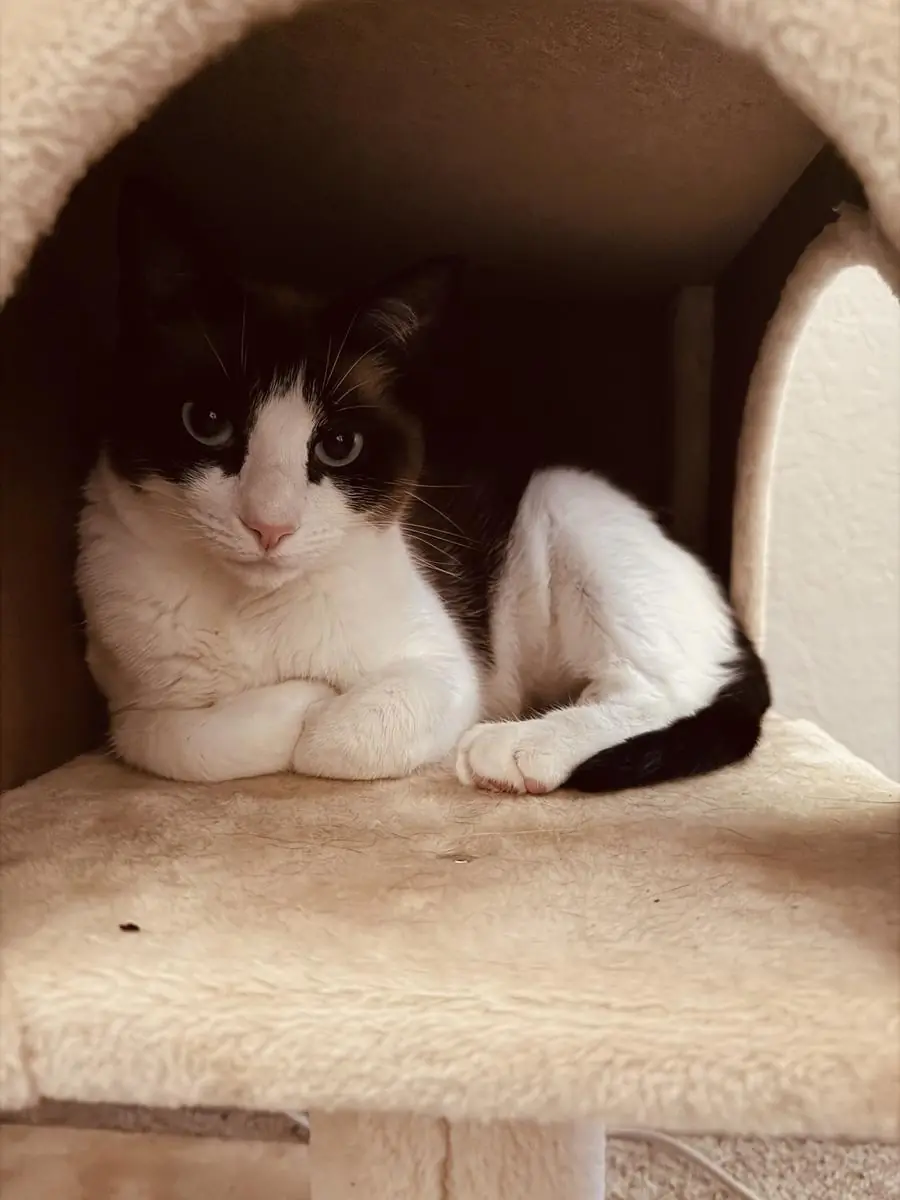
After going keto, dessert became the thing I longed for but hesitated to eat. So I tied on an apron in my own kitchen and tested batch after batch by the soft glow of the oven. Before long, even the furry members of the family had learned to sit in a neat row, eyes bright with anticipation.
Then one day, little shell-shaped cakes rose into golden curves on the baking sheet. The rich aroma of browned butter filled the living room and drew everyone in.
That was how KEKE was born.
Not a grain of refined sugar, yet wrapped in a wonderfully rich aroma.
It is a gentle beginning at the breakfast table and an easy sweetness for afternoon tea. Nourishing and light — made for everyone who loves dessert and chooses to live with care.
Why you will love KEKE madeleines
Truly keto, without the burden: Carefully selected low-carb ingredients, with no refined sugar, make it easier to stay in ketosis.
The classic French golden curve: Delicately crisp and golden outside, soft and moist inside, with a deep buttery aroma.
A gentle everyday ritual: Enjoy one with black coffee at breakfast or unsweetened tea in the afternoon.
Serving suggestions
Enjoy as is: Thaw at room temperature to taste the pure, rich buttery flavor.
Microwave: Warm for 5–8 seconds for an even softer, more tender crumb.
Air fryer or oven: Warm at 160°C / 320°F for 2–3 minutes to bring back the just-baked crisp outside and soft center.
Let this little tenderness brighten your sugar-free moment
Mid-Autumn Full Moon Night: One Moon, Two Reunions
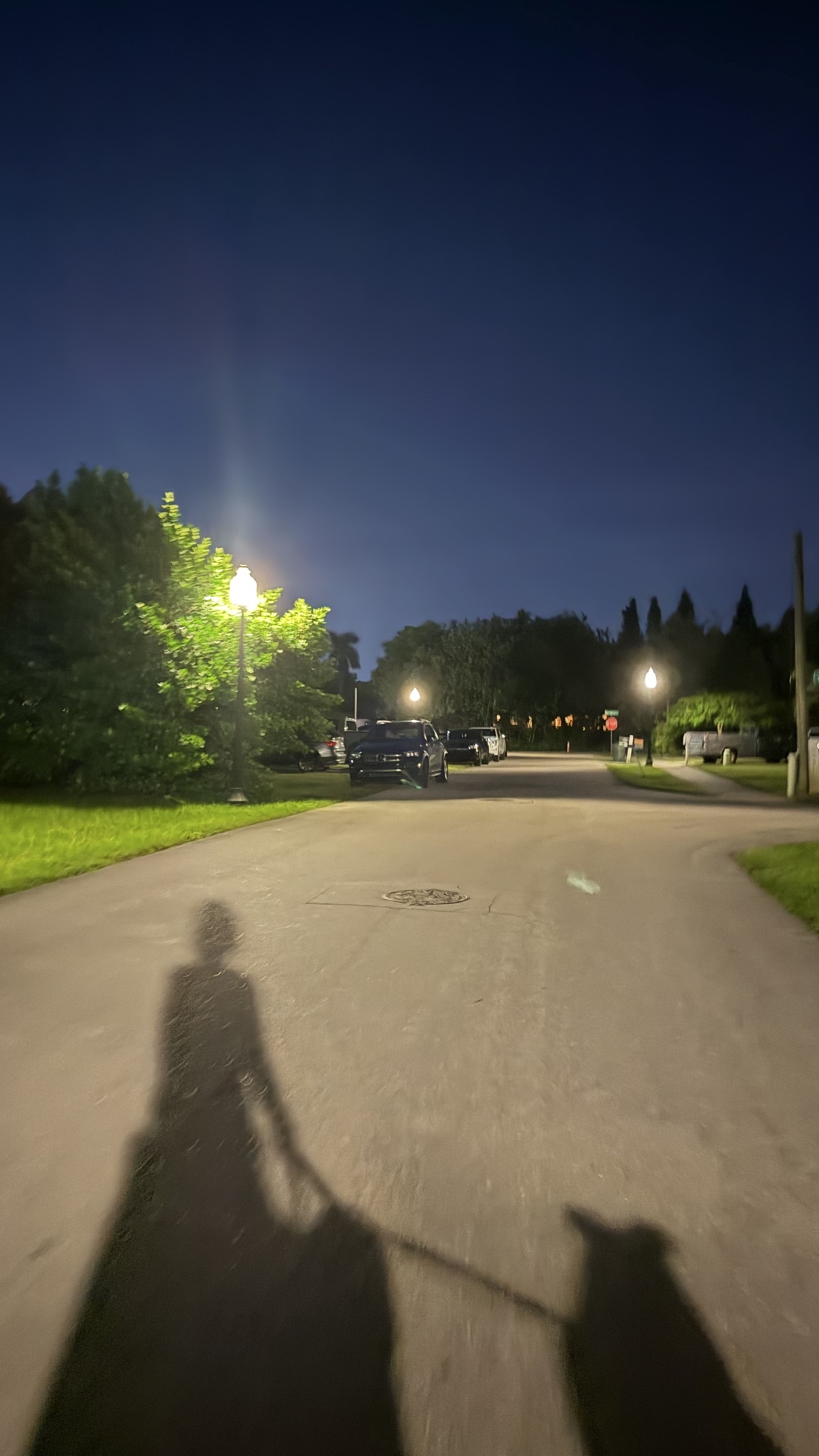
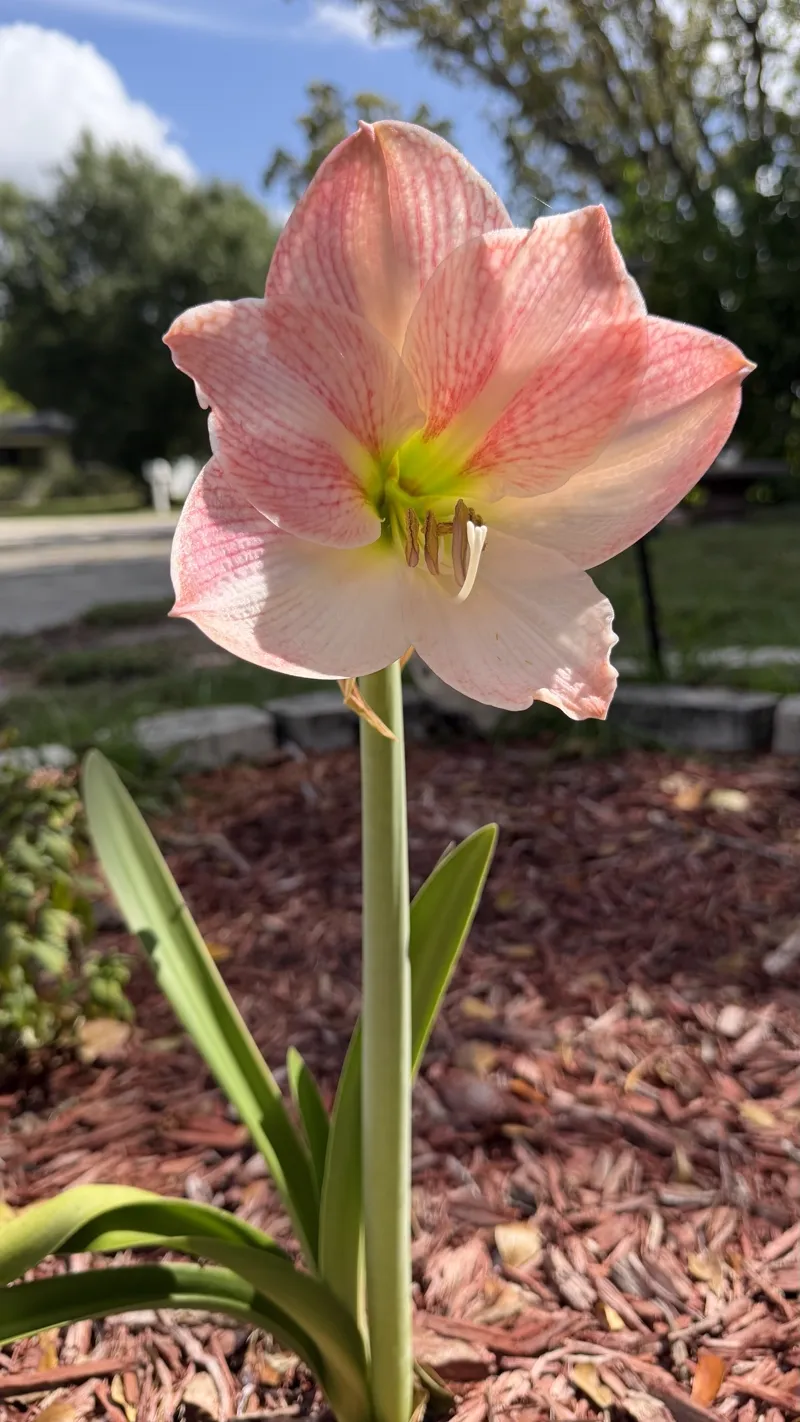
Tonight at ten, while walking the dogs to the end of the street, a wash of warm golden light stopped me in my tracks.
My neighbors had built a sukkah. Strings of tiny lights hung from its roof, their warm glow slipping through the gaps in the palm leaves, while songs and laughter drifted from inside. Today was the first day of Sukkot, and it also fell on Friday evening, Shabbat—no wonder it was so lively.
I stood beneath the streetlight for a while. I could not understand the lyrics, but I understood that kind of joy—the joy of family gathered together to eat, sing, and give thanks for the harvest.
As it happens, today is also our Mid-Autumn Festival. One is Sukkot, one is Mid-Autumn; the names are different, but the dates met, and even their meanings met: gratitude for the harvest, family reunion, and prayers for peace.
Different cultures, different faiths—yet when we look up, we see the same moon. Tonight it was large and round, hanging above the palm trees, so bright that even the streetlights seemed unnecessary.
I thought of Psalm 133: “Behold, how good and how pleasant it is for brethren to dwell together in unity!”
Tonight, the end of our street looked exactly like that verse.
Happy Mid-Autumn Festival. Shabbat Shalom. May the moonlight reach you too, and may the people you love be by your side. 🌕
Mushrooms are the superfood of my keto table — from breakfast to dinner — with real research to back it up.
The other day I saw a tweet calling mushrooms an underrated superfood. I couldn't agree more.
I love mushrooms. They're the superfood of my keto table, versatile enough to go from breakfast to dinner: mushrooms in my omelette, tofu and mushrooms as the perfect pair in miso soup, and they work in stir-fried lettuce with eggs too. Mushrooms go with eggs, tofu, meat — pretty much every protein out there; there seems to be nothing they can't pair with. And in a stew? The moment mushrooms go in, the broth turns incredibly savory — so tasty it'd make your eyebrows fall off. Mushrooms even eat like meat, full of umami.
A small handful of mushrooms packs astonishing nutrition. Very low in carbs, so they're keto-friendly, and rich in B vitamins, selenium, potassium, and beta-glucan fiber. Sun-dried mushrooms even contain vitamin D. Their most special compound is ergothioneine, a powerful antioxidant. Mushrooms are the richest dietary source of ergothioneine, especially shiitake, oyster, maitake, and king oyster mushrooms.
A 2021 Penn State meta-analysis pooling 17 studies and nearly 20,000 cancer patients found that eating about 18 grams of mushrooms a day — just a small handful — was associated with roughly 45% lower cancer risk than non-eaters. A National University of Singapore study following 663 adults over 60 for six years found that those eating more than two servings of mushrooms a week had about 50% lower odds of mild cognitive impairment. These are observational studies, but they all point the same way: people who eat mushrooms often end up with a body and brain that's hard to beat.
One thing to remember: for safety and easier digestion, it's best to cook mushrooms thoroughly before eating!
I eat mushrooms almost every day. For a mushroom lover like me — why not every day.
Trump wants to rename Artificial Intelligence to Super Intelligence; Newsom fired back with an executive order. I thought about it seriously: this name should have been changed long ago.
The backstory
Trump signed an executive order requiring the federal government to say Super Intelligence instead of Artificial Intelligence; California governor Newsom immediately signed an order declaring that artificial intelligence shall permanently be called artificial intelligence, captioned “You're welcome, America.”
But the rename itself, I think, deserves a serious discussion.
ARTIFICIAL comes with a built-in hint of “fake”.
The word artificial carries an undertone of fake, of knockoff — an artificial flower is a fake flower. And today's AI already surpasses humans in many areas. To keep calling it imitation, knockoff intelligence is neither accurate nor fair.
SUPER means superb, not above us.
Super isn't about rising above humanity — it's superb: like a superhero, extraordinary, full of infinite possibility.
In these years of anxiety, depression, and overflowing negativity, a little brightness is exactly what humanity is missing. Many people feel both fond of AI and uneasy about it — this rename opens up room for imagination.
And “super” is such a morale boost; it just lifts your mood.
Habitual thinking makes people resist any renaming.
From Store-Bought Yogurt to Living Cultures: The Naturally Aged Aroma I Brew in My Kitchen
Every night at eight, a small ritual: straining, feeding, and a cup of kefir that stretches like silk.
Every night at eight, when the kitchen lights spill across the quartz countertop, comes the quietest — and most looked-forward-to — moment of my day.
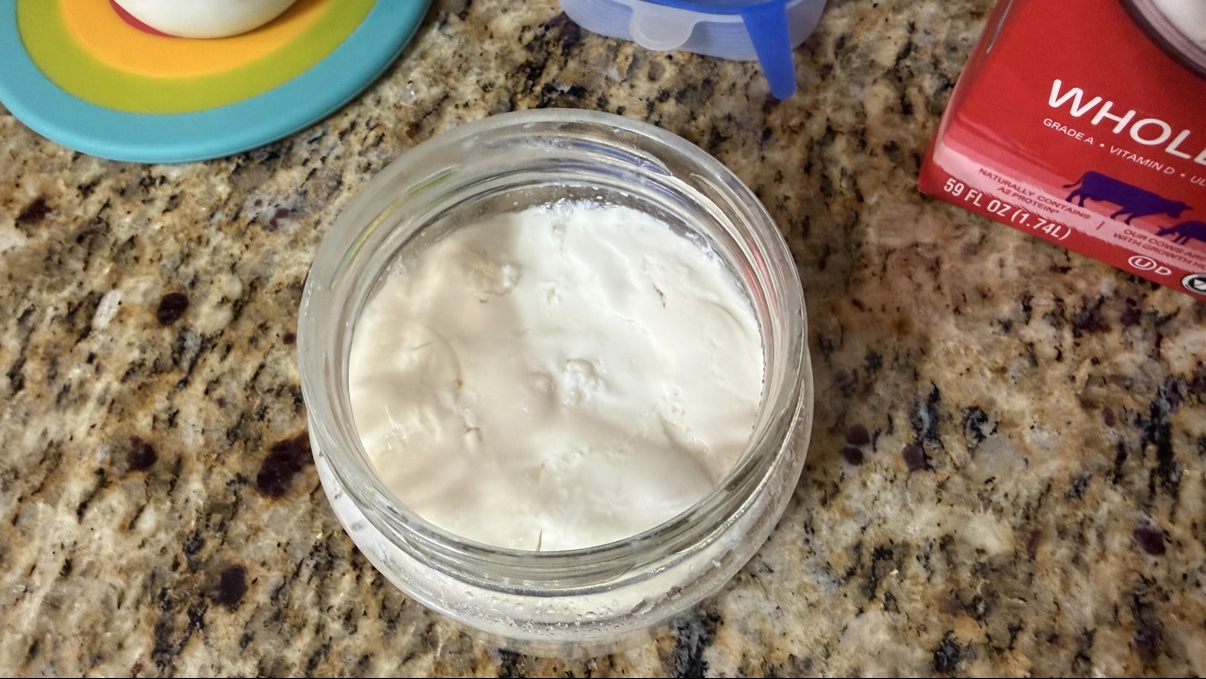
Tonight, as usual, I opened the glass jar that had been fermenting all day. What greeted me was a milky-white firmness, dense as soft tofu. I knew my live milk kefir grains had completed another beautiful cycle of living metabolism.
Saying goodbye to passersby, meeting true living symbiosis
For a long time, I drank store-bought bottled kefir, even using commercial yogurt as a starter to keep fermenting batch after batch in my kitchen. Back then I thought yogurt tasted about like that — blunt, one-note sourness.
Until recently, when I finally made up my mind and brought home true, natural, live kefir grains.
I had assumed caring for live cultures would be fussy, and feared I might kill them by accident. But once I started spending two minutes a day with them, I found them far hardier than I had imagined. More surprising still was the flavor they gave back — it completely overturned what I thought yogurt could be.
The first sip of kefir I had strained with my own hands stopped me short. This was no flavor industrial production could replicate — a faintly boozy, jiuniang-like warmth, the naturally matured (Natural Mature), grainy mellowness of a sourdough starter.
That smooth texture, flowing with a slight stretch, is proof of kefiran — the natural polysaccharide secreted by a healthy colony. From nothing but the simplest A2 whole milk, dozens of natural lactic-acid bacteria and wild yeasts, gestated together, had produced such rich and quiet layers of flavor.
The eight o'clock ritual: straining, feeding, nourishing
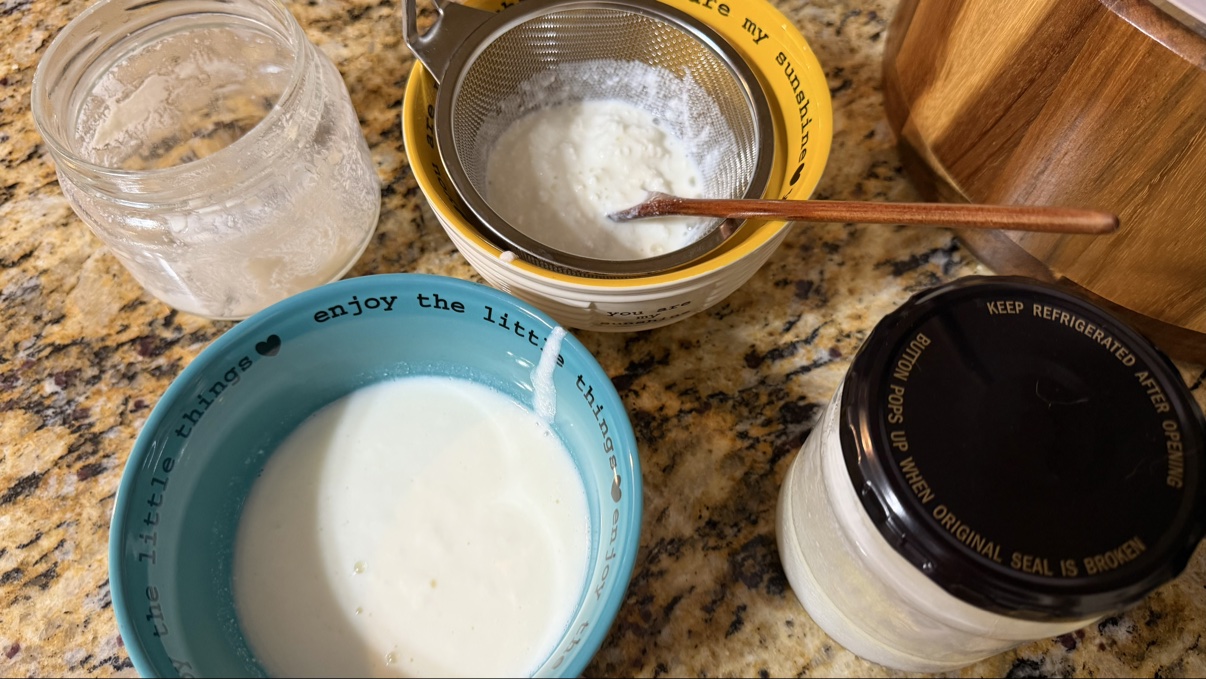
Tonight at eight, I recorded this small ritual that belongs to Casa Yun:
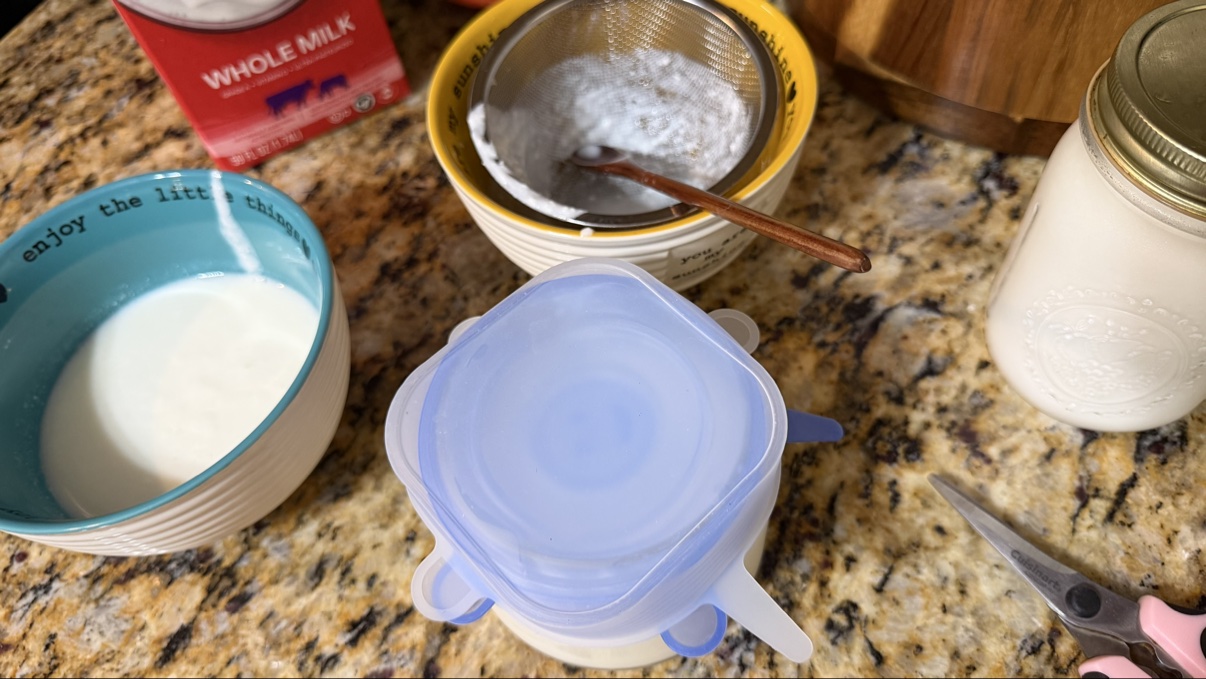
Harvest by straining: pour the fermented yogurt into a fine stainless-steel mesh strainer and nudge gently with a wooden spoon; the thick, smooth, living kefir flows into the bowl.
Born again: the grains left in the strainer need no rinsing — scoop them straight back into a clean glass jar.
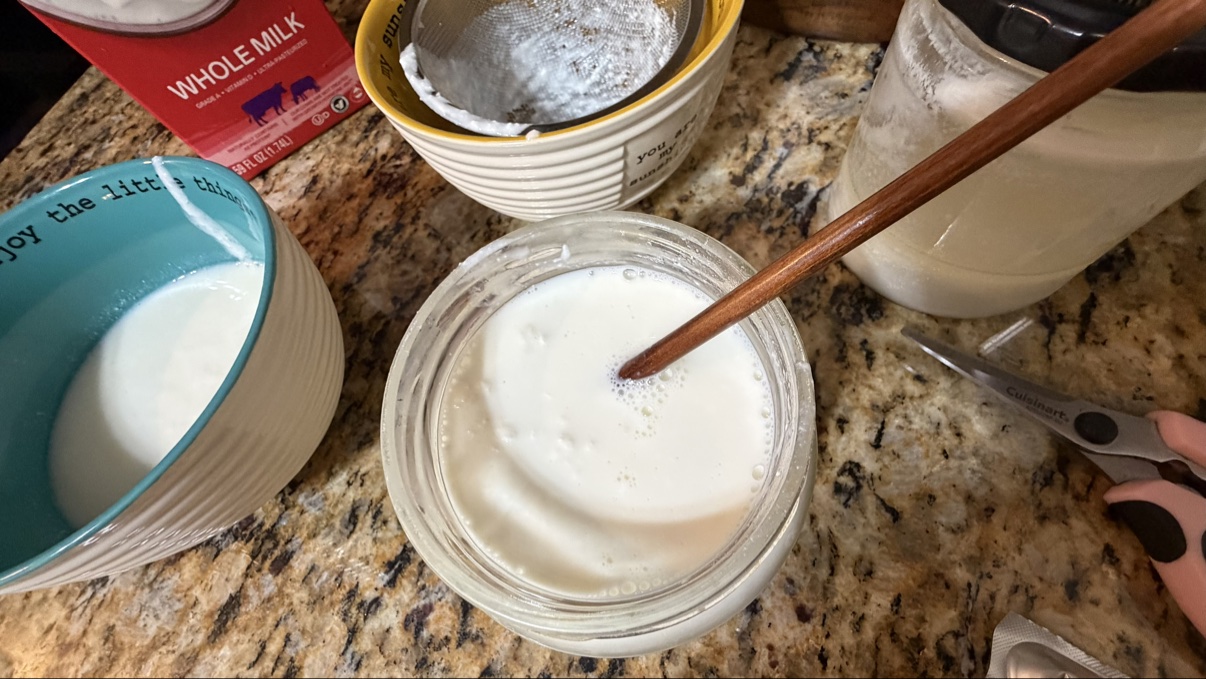
Fresh source: pour in two cups of fresh A2 whole milk, and let the grains, fed for a full day, rest on in a safe home.
Gentle watch: cover loosely and set quietly in a corner. Over the next 24 hours they will keep growing in secret, preparing my next cup of vibrant natural nourishment.
To the strained cup I like to add chia seeds, black sesame powder, sweet almonds and a few nuts. It is not only a golden keto, blood-sugar-friendly breakfast — it is the most direct deep repair for gut and body.
My health, my call
As Florida's weather slowly cools, my body seems to call for a new order. The small ailments and fatigue of the past are behind me; it is time to pick up exercise again, embrace nature, and let the body glow anew from the inside out.
Today I even snuck a selfie. I want to record this starting point — to see, nourished by living cultures, in the daily rhythm of exercise and self-love, what a renewed self might look like in two weeks, a month, half a year.
This tiny culture grows every day; in time it will ferment faster and yield more. I am already looking forward to the day the grains are strong enough to leaven a wheat-scented "Casa Yun aged kefir sourdough loaf" — and to sharing this natural treasure of health with more friends who love life.
Health was never a distant slogan. It is the everyday sizzle of the kitchen, every bite that nourishes the body — the quiet confidence of taking charge of one's own health.
Welcome to Casa Yun. Let us slowly age into better selves, together, as the years pass.
On "family of origin," overcompensating out of fear, and the quiet grace of pressing on toward the goal.
Over the past few days, a specific scripture has crossed my path repeatedly: "Running toward the goal." Perhaps it is no coincidence, but a gentle reminder intended for this moment.
Recently, I've noticed more people around me talking about their "family of origin."
Someone brought up that famous verse: "Forgetting what is behind and straining toward what is ahead, I press on toward the goal." He rarely spoke of his parents, only sharing how he had moved on, experienced small miracles, and felt deeply blessed by God.
Hearing those words, I simply smiled inside—a quiet, knowing smile.
Those who understand need no explanation. Only those who have truly walked through the wilderness can sense the subtle, unresolved waves beneath words that sound overly passionate or picture-perfect.
1. "Family of Origin": An Abstract Refuge
When a person's childhood is filled with warmth, speaking of parents usually comes with concrete, grounded memories of daily life. But when someone frequently defaults to the abstract concept of "family of origin," it often encapsulates memories too bitter, painful, or traumatic to face directly.
As time goes on, everyone seeks healing in their own way. Some find new life through a loving partner, while others find solace in faith. These are genuine blessings. Yet sometimes, beneath the loud declarations of being "the happiest person alive," you can feel a subtle sense of trying too hard.
2. Overcompensating Out of Fear
The more fervently someone tries to prove a point, the more it reveals a deep-seated lack from the past.
This isn't hypocrisy; it's a natural mechanism of self-protection. Having experienced helplessness that cut to the bone, when a tiny beam of light finally appears—a welcoming home, a quiet sanctuary—they cling to it like a swimmer holding onto a lifeline, declaring to the world: "I am safe. I am doing wonderful."
Behind that exaggerated sense of joy often lies a quiet anxiety: the lingering fear of losing it all.
3. Gently, Pressing On
Understanding this isn't about tearing down anyone's armor. It is about recognizing the fragile light and subtle heartbreak inherent in human nature, allowing room for empathy and gentleness.
Those who loudly proclaim they have "forgotten what is behind" may never truly have forgotten. Yet, in their own way, they are living bravely, offering a long-overdue sense of comfort to the helpless child they once were.
"Forgetting what is behind and straining toward what is ahead, I press on toward the goal."
As this scripture echoes once more, I choose to gather my thoughts and move forward. With a quiet grace that comes from truly seeing life for what it is, I press on toward the goal—gently and steadily.
The stock market is not a casino: stay away from the house, stay away from the games that cost you your rationality, and give your time to assets truly worth holding.
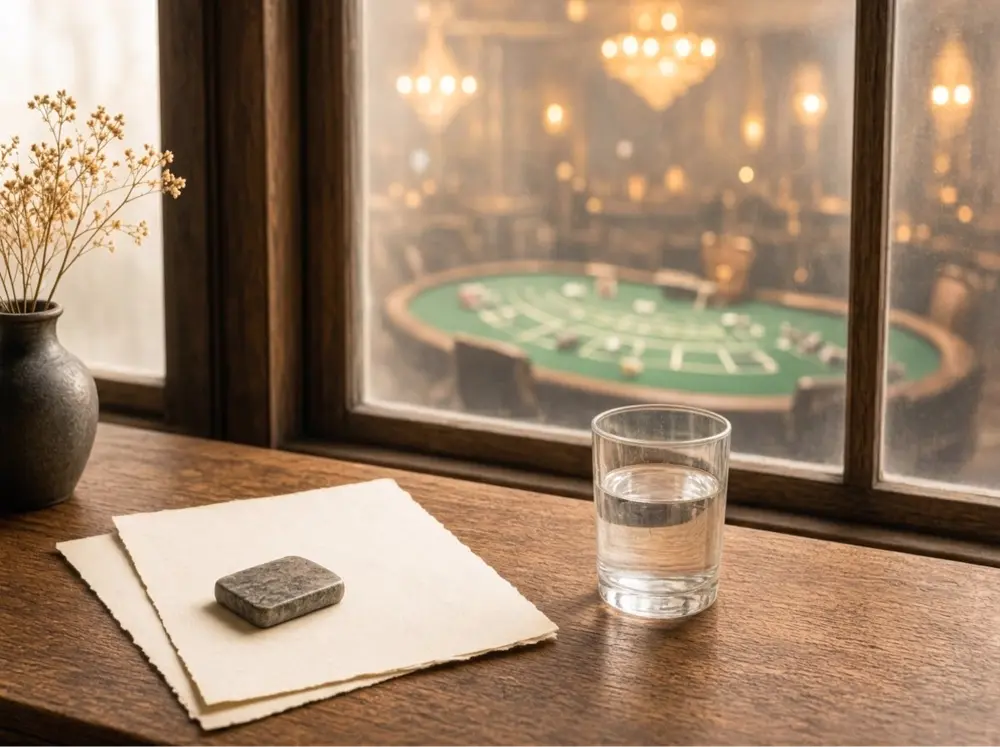
Many people compare the stock market to a casino.
I used to think so too. In waves of red-hot rallies, I even tasted that dizzying feeling of "every move I make turns a profit." It does feel like sitting at a gaming table — noisy, thrilling, full of random temptations. You think you've read the trend, that a flash of intuition has let you catch the pulse of the times. But after being tossed around by the market a few more times, after a few concept stocks have taught you harsh lessons, you gradually wake up: in those short-term games built on information asymmetry and deliberately amplified emotions, retail investors usually see only the excitement — while the real opportunities have long since quietly moved on.
Whether it's the roulette wheel in a casino or the hyped short-term themes, earnings plays, and technical indicators in the stock market, they may look full of opportunity on the surface, but each has its own rules of the game behind it. Retail investors are usually the ones with slower information and relatively limited capital and resources. By the time you see the news, hear the rumor, and finally muster the courage to chase in, the market may have long passed its best phase. Staring at the screen's ups and downs every day, guessing whether the next earnings report will bring a surprise, chasing the next policy tailwind — it looks diligent, but it easily traps you in a game where you hold no advantage. The short-term market is full of randomness; no one can consistently predict every move, and the costs and emotional drain of frequent trading may quietly erode your returns without you noticing.
But the stock market and the casino are, in the end, fundamentally different.
In a casino, chips mostly circulate between players and the house; behind the stock market, by contrast, is a real, constantly changing world. There is technology that keeps breaking through, innovation that reshapes industries, and outstanding companies that have survived competition and trials and keep widening their moats. When you stop staring at the screen's ups and downs every day, stop obsessing over whether tomorrow goes up or down, and start shifting your gaze from the share price to the business itself — studying its business model, competitive advantages, and long-term growth potential — your relationship with the market quietly changes.
You are no longer just a participant chasing price swings; by holding stocks, you become a sharer in the company's future growth. You begin to understand that what investing is truly worth pursuing is not buying at every bottom and selling at every top, but buying assets worth holding for the long term at reasonable prices — letting time and the company's growth create opportunities for you to accumulate wealth.
Of course, holding for the long term doesn't mean buying and then ignoring everything. Excellent companies can also become overvalued, and once-powerful competitive advantages can gradually fade. What is truly worth holding long-term are assets whose fundamentals can withstand scrutiny, that can keep creating value, and that were bought at reasonable prices. Acknowledging the market's uncertainty doesn't mean giving up judgment; accepting the limits of your own ability doesn't mean stopping learning. Quite the opposite — precisely because you know you can't control everything, you need all the more to build an investment approach that suits you.
Stay away from the house — and away from the games that cost you your rationality.
Keep enough cash to feel at ease, so you can meet life's changes with composure; put quality assets you have researched and truly understand into a long-term portfolio — unshaken by momentary ups and downs, and not blinded to potential risks by past successes. The market will never run out of noisy themes or tempting opportunities, but not every rally is worth chasing, and not every race must be run.
Acknowledging your limitations — admitting that a large part of market outcomes comes down to luck — is not passive retreat; it is a rare kind of clarity. You don't have to be right every time, nor prove you're smarter than everyone else. More important than chasing wins and losses amid short-term volatility is holding your own rhythm, and giving your time, capital, and attention to what is truly worthwhile.
When you finally stop obsessing over beating the market, stop trying to outperform everyone, and instead focus on accumulating assets, understanding businesses, and patiently waiting for value to materialize — you'll find that investing is no longer an exhausting chase.
Stay away from the house; stay away from the table. Lengthen your gaze, steady your steps. When you stop treating every rise and fall as a win or a loss, time gets the chance to change from your enemy into your most loyal friend.
For everything there is a season, and a time for every matter under heaven. — Ecclesiastes 3:1
At half past five in the morning, I sit and wait for the sun to rise.
The sky is not yet fully light. All is quiet around me, as if the world too were waiting for a signal — a reminder: a new day has come again.
I often think: for everything there is a season, and a time for every matter under heaven. A time to set out, a time to stay; a time to care for others, and a time to turn around and care for oneself. We always thought life depended on one burst of effort; only later did we understand that what truly carries a person far is walking forward, a little, every day.
I am a highly sensitive person — Highly Sensitive Person, HSP for short. We who are sentimental rather than cold-hearted are like a band of born “frontline sentinels”: we see sooner than others, hear faster, and catch the emotions coming from all directions more easily. This sensitivity is a gift, and it can also become a burden. So I often remind myself: “Mission first, feelings aside.” MISSION FIRST DOES NOT CARE ABOUT FEELINGS.
This isn't about turning cold. In an age of information overload and fragmentation, it's about learning to set down the weight that was never mine to carry. Decluttering emotions isn't heartlessness — it's self-rescue. And not confusing the online world with real life: that's my daily required course.
But no matter how noisy the world gets, I am still moved by the sun rising each day, and I still tend with care the ground beneath my feet. Casa Yun probably grew, slowly, out of mornings like these.
Before it ever becomes a real house, it is first a direction in my heart: on the long pilgrim road, to keep for the weary a clean bed, a breakfast, a hot coffee — and a little quiet that needs no explaining. Travelers can stop here, sort their packs and sort their hearts; when daylight comes, shoulder their stories again and keep walking.
Speaking of “keeping walking” — every time I read that line in Philippians, “press toward the mark,” I can't help but laugh. Growing up in a Chinese-speaking world, I often heard such ringing, forceful phrases and always assumed they came from some propaganda slogan. Only later did I learn that “press toward the mark” was in the Bible all along; even “there is nothing new under the sun” was written long ago in Ecclesiastes. In that moment I was both stunned and delighted: the sentences that grew up with us turn out to be older than we thought — and to have a deeper source.
And “press toward the mark” is such a vivid image. In my mind there's always a person who sees the mark, throws caution aside, charges — charge, charge — and then, bang, runs straight into it. Every time I picture it, I laugh. Maybe faith was always allowed this kind of humor: solemn need not be stiff, and steadfast need not wear a frown. The mark isn't there to crash into; it's there to calibrate our direction. What we're called to do isn't to outrun everyone, but to still know where we're headed, even as we stumble along.
Every journey has a beginning, and will have an end. But the future is worth looking forward to, and hope keeps flowing. Casa Yun is not the destination — more like a lamp by the roadside: reminding everyone who comes here that rest is not stagnation, and setting out again need not wait until everything is ready.
So — charge. With faith, and with laughter; press toward the mark, but remember not to actually crash into it.
勻點Written before Casa Yun set out
About
The person and the hope behind Casa Yun
A personal corner for noticing life, keeping stories, and building something slowly.
About me
A life still opening
I am the creator of Casa Yun. Here I record moments from my life in the United States and the thoughts that grow from them.
I hope Casa Yun can grow, little by little, from a personal page into a small guesthouse that welcomes travelers.
For new visitors
Welcome. Begin wherever your curiosity leads.
Casa Yun is a collection of personal stories about home, roads, food, care, learning, and the possibility of starting again.
A simple way in
Three doors are open
01
Meet Casa Yun
Read the About page to learn who is writing and what this place may become.
02
Choose a chapter
Browse the four chapters and return as new stories are added.
03
Read in your language
Use the language menu above to read in English, Chinese, Spanish, Portuguese, or Japanese.